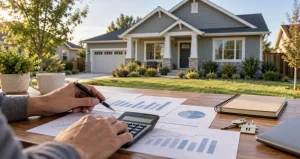
When mortgage rates are high, the rent-versus-buy decision becomes far more complicated than the familiar advice that owning is always better. A home can still be an excellent long-term asset, but paying a high purchase price while borrowing at an expensive rate can put enormous pressure on a household budget. At the same time, renting is not automatically the cheaper choice, especially in areas where rents continue to absorb a large share of monthly income.
My approach is simple: I do not start by asking whether renting or buying is better in general. I start by asking which option gives a specific household the strongest combination of affordability, stability, flexibility, and financial resilience. That distinction matters because two people earning similar incomes can make completely different choices and both can be financially sensible.
In a high-rate environment, I believe buyers need to be more selective than usual. The goal should not be to buy simply because homeownership feels like the next financial milestone. The goal should be to buy when the numbers, lifestyle, emergency savings, and expected time in the home work together.
Why High Mortgage Rates Change the Calculation?
Interest rates directly influence how much home a buyer can comfortably finance. Freddie Mac reported an average 30-year fixed mortgage rate of 6.71% on September 3, 2026, illustrating why financing costs remain such an important part of today’s affordability discussion. A higher rate can significantly increase monthly principal and interest costs even when the property’s purchase price does not change.
This is why looking only at the asking price of a home can be misleading. What matters to your monthly budget is the combination of purchase price, down payment, loan amount, interest rate, property taxes, insurance, and other ownership expenses. A house that appears affordable based on its listing price may feel very different once the complete monthly cost is calculated.
The Biggest Mistake I See in Rent-Versus-Buy Comparisons
The most common mistake is comparing monthly rent directly with only the mortgage principal and interest payment. That comparison leaves out too much. Homeowners may also pay property taxes, homeowners insurance, maintenance expenses, association fees, utilities, and mortgage insurance depending on their financing.
There are also upfront expenses. The Consumer Financial Protection Bureau notes that closing costs can commonly equal about 2% to 5% of a home’s purchase price, separate from the down payment. That means buying requires more than simply having enough money for a monthly mortgage payment.
When I compare renting with buying, I prefer to calculate the total cost of occupying each property. That produces a much more useful answer than comparing two headline monthly numbers.
When Renting Makes More Sense in a High-Rate Market?
Renting can be the stronger financial decision when the difference between rent and the total cost of ownership is substantial. If a similar home costs $2,000 per month to rent but would require a much larger monthly commitment after mortgage payments, taxes, insurance, and maintenance, renting may provide valuable breathing room.
You May Like: Why My Home Appraisal Came In Low: And How I Turned It Around
That breathing room becomes especially useful when it allows you to strengthen your emergency fund, reduce expensive debt, improve your credit profile, or build a larger future down payment. Renting can also make sense if your career, family situation, or preferred location may change within the next few years.
Flexibility has financial value. Buying and selling homes involve transaction expenses and time. A person expecting to relocate relatively soon may have less opportunity for ownership benefits to outweigh those costs.
When Buying Can Still Be the Better Choice?
High rates do not automatically make buying a bad decision. Someone with reliable income, strong savings, manageable debt, a comfortable monthly budget, and plans to remain in the same property for many years may still find ownership attractive.
Buying may become particularly reasonable when the property fits your long-term needs and the total payment leaves enough room for savings, retirement contributions, repairs, and normal life expenses. Homeownership can provide housing stability and allows borrowers to gradually build equity as mortgage principal is repaid.
The key word is comfortably. Being approved for a mortgage does not necessarily mean that borrowing the maximum available amount is wise. CFPB guidance similarly encourages consumers to focus on what fits comfortably within their broader financial priorities rather than simply relying on the amount a lender is willing to provide.
Do Not Buy Based on the Hope of Refinancing
One argument I would never make central to a home purchase is, “I can refinance when rates fall.” Refinancing may become possible later, but future mortgage rates are uncertain. Refinancing can also involve qualification requirements and transaction expenses.
I prefer a safer test: would you still be comfortable owning this home if your current financing remained in place longer than expected? If the answer is yes, a future refinance could become an additional benefit. If the purchase only works because you expect dramatically cheaper financing soon, the margin for error may be too small.
You May Like: Closing Costs Explained: What That First Estimate Quietly Leaves Out
Your Time Horizon Matters More Than Most People Realize
Buying usually becomes easier to justify when you expect to remain in the property for a meaningful period. In the early years of a standard mortgage, a larger portion of the payment goes toward interest compared with later years. Ownership also begins with transaction expenses that need time to be absorbed.
This is why I would place expected holding time near the top of the decision checklist. Someone planning to stay for many years is evaluating a fundamentally different financial situation from someone who may relocate in two years.
Cash Reserves Matter More Than the Down Payment Alone
I would be uncomfortable buying a home if closing left the household with almost no accessible savings. A large down payment may look financially responsible, but draining nearly every dollar of cash to complete the purchase can create a different kind of risk.
Homes require repairs. Appliances fail, plumbing develops problems, insurance expenses can change, and property taxes may rise. A homeowner needs financial capacity beyond the mortgage payment. Keeping a meaningful emergency reserve after closing can therefore be more important than stretching to make the largest possible down payment.
Run a Real Monthly Cost Comparison Before Deciding
Before making an offer, create two simple budgets. On the renting side, include rent, renter-paid utilities, insurance, parking, and other required charges. On the ownership side, include principal, interest, property taxes, homeowners insurance, mortgage insurance if applicable, association fees, expected maintenance, and higher utility expenses where relevant.
Then compare what remains each month after housing and normal household expenses. I consider this leftover cash more useful than a simple affordability ratio because it shows whether the decision still leaves room for emergencies, savings, retirement, travel, childcare, transportation, and other real-life priorities.
My Honest Take: Buy Stability, Not Pressure
If buying requires you to abandon emergency savings, reduce retirement contributions, carry a stressful monthly payment, and hope that rates quickly decline, I would lean toward renting longer. There is nothing financially inferior about renting while strengthening your position.
But if you have stable income, sufficient reserves, manageable debt, a home that genuinely fits your needs, and a payment you can comfortably carry for years, I would not automatically delay a sensible purchase simply because rates are higher than they once were.
The best decision is rarely determined by one market statistic. It comes from matching housing costs with the life you actually expect to live.
FAQs About Renting Vs. Buying in a High-Rate Market
1. Is renting always better when mortgage rates are high?
No. High mortgage rates make financing more expensive, but local rents, home prices, your down payment, income stability, and expected length of ownership all matter. A well-prepared household planning to stay for many years may still have good reasons to buy.
2. Should I wait for mortgage rates to fall before buying?
Waiting can make sense if today’s payment would strain your budget. However, nobody can reliably know exactly when rates will move or how home prices will respond. Base your decision on what you can comfortably afford today rather than an uncertain future rate.
3. How long should I plan to stay before buying?
There is no universal number that works in every market. In general, a longer holding period gives you more time to spread transaction expenses and build equity. If you may relocate soon, renting deserves serious consideration.
4. Is rent really wasted money?
No. Rent purchases housing, flexibility, and freedom from many ownership responsibilities. Homeowners build equity, but they also pay interest, taxes, insurance, repairs, and transaction expenses. The more useful question is which arrangement best supports your financial goals.
5. Should I use all my savings for a larger down payment?
Usually, preserving adequate reserves deserves serious consideration. Homeowners can face unexpected repairs and other expenses. A slightly smaller down payment with a healthy emergency fund may provide greater financial resilience than owning a home with almost no cash available.
6. What expenses should I include when comparing buying with renting?
For ownership, consider mortgage principal and interest, taxes, insurance, maintenance, association charges, mortgage insurance when applicable, utilities, and upfront transaction costs. For renting, include rent, renter-paid utilities, insurance, parking, and required property fees.
7. Is buying worthwhile if my mortgage payment is higher than my rent?
It can be, depending on the difference and your long-term plans. Part of a mortgage payment can build equity, while ownership may provide greater housing stability. However, a very large monthly gap should be evaluated carefully because that extra cash could otherwise support savings and other financial goals.
8. Does homeownership protect me from rising housing costs?
A fixed-rate mortgage can stabilize the principal and interest portion of your housing payment. However, the total cost of ownership is not completely fixed because property taxes, insurance, maintenance expenses, utilities, and association charges can change over time.
9. What financial signs suggest I may be ready to buy?
Useful signs include reliable income, manageable existing debt, adequate savings for upfront expenses, an emergency reserve that remains after closing, and a total housing payment that fits comfortably within your normal budget without sacrificing important financial priorities.
10. What is the simplest way to make the final decision?
Calculate the complete monthly cost of both options, consider how long you realistically expect to stay, review your savings after the purchase, and test whether the ownership budget still works if nothing improves financially. If buying remains comfortable under conservative assumptions, it may be reasonable. If it requires everything to go perfectly, renting longer may be the stronger choice.
Conclusion
Renting versus buying in a high-rate market is not a contest with one universal winner. Buying can still create long-term stability and equity, while renting can protect flexibility and preserve valuable cash flow.
My preferred approach is to ignore pressure, calculate the complete cost, protect emergency savings, consider your realistic time horizon, and choose the option that leaves your household financially strong after the housing payment is made.